
What Are Police Body Camera Laws in California (Penal Code 832.18 PC)?
Body-worn cameras (BWCs) are essential tools in modern California law enforcement, providing objective video and audio records of police encounters with the public.
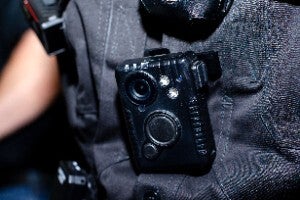
When used correctly, body camera footage promotes transparency in law enforcement, deters officer misconduct, and provides critical evidence in criminal prosecutions.
To prevent law enforcement agencies from mishandling, selectively recording, or altering video evidence, the state enacted California Penal Code 832.18 PC.
This statute establishes statewide best-practice guidelines for how police departments, sheriff's offices, and state law enforcement entities must collect, store, tag, preserve, and release body-worn camera data.
Understanding these statutory mandates is vital for criminal defendants, as police non-compliance with PC 832.18 can provide grounds to challenge prosecution evidence, impeach officer testimony, or seek case dismissals.
What Does Penal Code 832.18 PC Mandate for Law Enforcement Agencies?
Under California Penal Code 832.18 PC, every law enforcement agency that deploys body-worn cameras must establish formal written policies governing how it downloads, categorizes, stores, and manages recorded data.
Statutory Breakdown of Penal Code 832.18 PC Requirements
|
PC 832.18 Policy Requirement |
Statutory Mandate |
Legal Significance for Defense |
|
Data Custody & Downloading (PC 832.18(a)(1)) |
Assigns downloading personnel and requires supervisors to take immediate custody of cameras after use-of-force incidents. | Prevents officers from altering, deleting, or withholding critical footage after controversial arrests. |
|
Tagging & Categorization (PC 832.18(a)(4)) |
Requires classifying recordings as evidentiary (crime, arrest, or use of force) or non-evidentiary upon download. | Flags evidence of criminal charges or officer misconduct for extended preservation. |
|
Anti-Tampering Measures (PC 832.18(a)(3)) |
Requires strict security to prevent unauthorized access, editing, copying, or deletion of body camera data. | Preserves the chain of custody and integrity of video evidence. |
What Are the Mandatory Retention Period Rules for Police Body Camera Footage?
Penal Code 832.18 PC mandates strict minimum retention timelines to preserve video evidence for court proceedings, defense review, and administrative oversight.
Routine Incidents vs. Critical Evidentiary Incidents
-
Routine Non-Evidentiary Recordings: Body camera footage that does not capture a crime, arrest, search, citation, or public confrontation must be preserved for a minimum of 60 days before being purged.
-
Evidentiary & Critical Incidents: Footage capturing an arrest, search, criminal investigation, formal complaint, use-of-force incident, or officer-involved shooting must be retained for at least two years.
-
Pending Litigation & Capital Cases: If footage relates to an active felony prosecution, open criminal appeal, capital case, or civil rights lawsuit, agencies must preserve the data indefinitely until final legal resolution.
Prohibitions on Personal Use and Unauthorized Distribution
Under PC 832.18(a)(8), all body-worn camera recordings remain the exclusive property of the law enforcement agency.
Police personnel are strictly prohibited from accessing recorded data for personal use or uploading footage onto social media or internet platforms. Agency personnel who violate these restrictions face disciplinary action and potential criminal penalties.
How Does Body Camera Footage Review Work for Police Officers?
Under standard agency policies guided by PC 832.18, officers may review their body camera recordings before drafting initial incident reports to ensure accurate reporting. However, specific procedural restrictions apply during critical incidents:
-
Use-of-Force Restrictions: In officer-involved shootings or incidents involving severe injury or potential police misconduct, supervisors must take immediate physical custody of the body camera (PC 832.18(a)(1)).
-
Delayed Access in Misconduct Inquiries: When an officer is under administrative or criminal investigation as a subject or key witness in a severe incident, internal investigators can temporarily restrict or delay the officer's access to footage until initial statements are taken. This preserves the integrity of independent statements and prevents officers from tailoring their accounts to fit the video.
How Can Violations of PC 832.18 PC Be Used in Criminal Defense?
When police officers fail to activate body-worn cameras, improperly mute audio, delay downloading footage, or fail to preserve video evidence as required by PC 832.18 PC, defense attorneys can leverage these failures to challenge the prosecution's case.
Key Defense Strategies Involving Body Camera Violations
-
Suppressing Unreliable Prosecution Evidence (PC 1538.5): If officers selectively record or turn off cameras during a search, traffic stop, or field sobriety test, defense counsel can file a motion to suppress evidence, arguing that the officer's testimony lacks corroboration and violates statutory chain-of-custody protocols.
-
Impeaching Officer Credibility: If an officer's written report or courtroom testimony contradicts body camera footage—or if the officer failed to activate the camera in direct violation of mandatory department policy—defense attorneys can cross-examine the officer on procedural non-compliance to undermine their credibility before the judge or jury.
-
Filing Trombetta / Youngblood Motions for Destroyed Evidence: If law enforcement fails to retain body camera footage in violation of PC 832.18 retention schedules, defense counsel can file a motion alleging bad-faith destruction of favorable exculpatory evidence, which can lead to adverse jury instructions or complete dismissal of criminal charges.
-
Compelling Disclosure via Brady and Pitchess Motions: If police departments withhold body camera footage capturing officer misconduct, excessive force, or illegal searches, defense attorneys can file Brady motions (PC 1054.1) or Pitchess motions (Evid. Code 1043) to compel court-ordered release of unredacted recordings.
What Is a Hypothetical Example of a PC 832.18 Body Camera Defense Strategy?
Scenario: The Unrecorded Search and Arrest
-
The Incident: Patrol officers pull David over for an alleged non-functional brake light. During the stop, officers claim David consented to a vehicle search, during which they allegedly discovered an unlicensed handgun under the passenger seat. David maintains he explicitly refused search consent and that officers searched the car illegally.
-
The Policy Violation: Under department written policy established per PC 832.18 PC, officers must activate body cameras before initiating the traffic stop and during all search requests. However, the arresting officer failed to activate his camera until after the handgun was retrieved. Furthermore, the officer failed to deliver the camera to his supervisor for immediate data download, as departmental protocol requires.
-
The Defense Strategy: David's criminal defense attorney files a Motion to Suppress Evidence (PC 1538.5) along with a motion challenging officer credibility based on PC 832.18 non-compliance. Counsel highlights that the officer intentionally violated mandatory body camera activation and downloading rules, leaving no objective record of the alleged search consent.
-
The Judicial Outcome: Finding that the officer's failure to record violated PC 832.18 policies and created reasonable doubt regarding consent, the trial judge suppresses the handgun from evidence. Lacking admissible physical evidence, the prosecution dismisses all weapons charges against David.
What Laws Relate to California Police Body Camera Rules?
Understanding related statutes is critical because discovery obligations, law enforcement records, and video disclosure laws overlap across several California codes.
-
Assembly Bill 748 (AB 748) / Government Code 6254.19: Requires law enforcement agencies to release body-worn camera recordings of critical incidents (such as shootings or severe use of force) to the public within 45 days under the California Public Records Act.
-
Senate Bill 1421 (SB 1421) / Penal Code 832.7 PC: Expands public access to police personnel records and body camera footage involving discharge of firearms, use of force causing great bodily injury, or sustained findings of officer dishonesty.
-
Penal Code 1054.1 PC (Prosecutorial Discovery Obligations): Requires prosecutors to disclose all body-worn camera video in their possession to defense attorneys during pre-trial discovery.
-
Penal Code 1538.5 PC (Motion to Suppress Evidence): Authorizes criminal defendants to move to suppress evidence obtained through illegal searches or seizures, frequently utilizing body camera footage as primary evidence.
-
Evidence Code 1043 EC (Pitchess Motion): Allows criminal defense counsel to petition courts for access to confidential officer personnel files, including internal affairs records involving body camera tampering or policy violations.
Frequently Asked Questions (FAQs)
Are police officers required to wear and turn on body cameras in California?
While PC 832.18 does not require every local city or county agency to purchase body cameras, any agency that deploys them must create mandatory written policies specifying when officers must activate them during enforcement actions, arrests, searches, and public encounters.
What happens if an officer turns off their body camera during an arrest?
If an officer intentionally deactivates their camera in violation of department policy, defense counsel can use this failure to impeach the officer's credibility, challenge the legality of the search or arrest in a suppression hearing, or request a court jury instruction regarding missing evidence.
Can I request police body camera footage of my own arrest in California?
Yes. During a criminal proceeding, your defense attorney has an absolute right under Penal Code 1054.1 PC to obtain all body camera recordings related to your case through formal criminal discovery. Members of the public can also request footage of critical incidents under Assembly Bill 748 and the California Public Records Act.
How long must police departments keep body camera video in California?
Under PC 832.18 PC, routine non-evidentiary video must be kept for at least 60 days. Evidentiary footage involving crimes, arrests, citations, searches, or use-of-force incidents must be preserved for at least two years, or longer if litigation is pending.
Can police edit or alter body camera video before presenting it in court?
No. Penal Code 832.18(a)(3) strictly prohibits officers and department personnel from editing, altering, deleting, or tampering with body camera recordings. Digital chain-of-custody tracking logs verify that the video files submitted in court match the original recordings.
Learn How Esfandi Law Group Can Help You
If you face criminal charges in California, body-worn camera footage can be the most crucial evidence in your case.
Whether police video proves your innocence or officers violated Penal Code 832.18 PC by failing to record, tamper-proof, or preserve video data, experienced legal representation is vital to protecting your rights.
At Esfandi Law Group, a Los Angeles criminal defense lawyer thoroughly reviews all law enforcement video files, metadata logs, and police department written policies.
We aggressively file discovery demands, Brady motions, and suppression motions to hold law enforcement accountable and fight for charge reductions or dismissals.
Contact our LA office today for a confidential case evaluation by phone or through our website contact form.