
In California, the legal distinction between willful arson (PC 451) and reckless arson (PC 452) depends entirely on intent (mens rea).
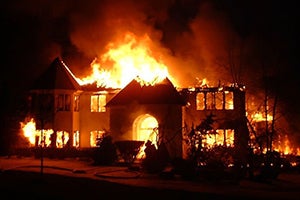
While California law imposes strict penalties for fire-related crimes to reduce catastrophic wildfire risk and public property damage, it distinguishes between deliberately setting a fire and causing one through extreme carelessness.
-
Willful and Malicious Arson (Penal Code § 451 PC) is an automatic felony that applies when someone intentionally sets fire to a structure, forest land, or property with the purpose to harm, destroy, or commit fraud. It carries state prison sentences ranging from 16 months to 9 years.
-
Reckless Arson / Unlawfully Causing a Fire (Penal Code § 452 PC) is typically a misdemeanor (though it can wobble to a felony) that applies when someone acts with gross disregard for a known fire risk—such as leaving an unattended campfire—without intent to cause harm.
Understanding this distinction is critical, as showing a lack of malicious intent is a primary defense strategy used to reduce felony arson charges to misdemeanor reckless burning.
Statutory Text (Legal Definition)
California Penal Code § 451 PC (Willful Arson) states:
"A person is guilty of arson when they willfully and maliciously set fire to or burn or cause to be burned or aid, counsel, or procure the burning of any structure, forest land, or property."
California Penal Code § 452 PC (Reckless Arson) states:
"A person is guilty of unlawfully causing a fire when they recklessly set fire to, burn, or cause to be burned any structure, forest land, or property."
Key Statutory Definitions
Courts apply distinct legal definitions to differentiate between intentional arson and reckless burning:
-
Willfully: Acting intentionally or on purpose.
-
Maliciously: Intentionally committing a wrongful act or acting with a deliberate wish to vex, annoy, or injure another person or commit fraud.
-
Recklessly: Being aware that your actions create a substantial and unjustifiable risk of causing a fire, consciously ignoring that risk, and acting in a way that gross deviates from how a reasonable person would act in the same situation.
-
Structure: Any building, bridge, tunnel, power plant, or commercial facility.
-
Inhabited Structure / Property: A structure or property currently used for dwelling or living purposes, whether occupied at the moment of the fire or not.
-
Organized Retail Theft Aggravation (PC 452(f) / SB 1242): Setting a fire inside a merchant's premises to facilitate organized retail theft or create a distraction serves as a statutory factor in aggravation, elevating penalties for reckless burning.
What Must Be Proven to Convict
Willful Arson (CALCRIM No. 1515)
To convict a defendant under CALCRIM No. 1515, the prosecution must prove beyond a reasonable doubt:
-
The defendant set fire to, burned, or caused the burning of a structure, forest land, or property (or aided, counseled, or procured the burning).
-
The defendant acted willfully and maliciously.
Reckless Arson (CALCRIM No. 1532)
To convict a defendant under CALCRIM No. 1532, the prosecution must prove beyond a reasonable doubt:
-
The defendant set fire to, burned, or caused the burning of a structure, forest land, or property.
-
The defendant acted recklessly.
-
The defendant did not own the property, or, if they did, the fire injured someone else or damaged another person's structure/property.
Penalties for PC 451 vs. PC 452
|
Statute & Offense Type |
Fire Result / Circumstance |
Felony State Prison Term |
| PC 451 (Willful Arson) | Great Bodily Injury | 5, 7, or 9 years |
| PC 451 (Willful Arson) | Inhabited Structure / Property | 3, 5, or 8 years |
| PC 451 (Willful Arson) | Uninhabited Structure or Forest Land | 2, 4, or 6 years |
| PC 451 (Willful Arson) | Personal Property (with Fraud/Injury) | 16 months, 2, or 3 years |
| PC 452 (Reckless Arson) | Great Bodily Injury | 2, 4, or 6 years |
| PC 452 (Reckless Arson) | Inhabited Structure / Property | 2, 3, or 4 years |
| PC 452 (Reckless Arson) | Uninhabited Structure or Forest Land | 16 months, 2, or 3 years |
| PC 452 (Reckless Arson) | Personal Property | N/A (Standard Misdemeanor) |
Hypothetical Examples
-
Insurance Fraud (PC 451 Felony): A business owner intentionally sets fire to their own commercial warehouse during non-business hours to collect a million-dollar commercial insurance payout.
-
Unattended Campfire (PC 452 Misdemeanor/Felony): A camper leaves a campfire burning during high-wind conditions in a dry brush area, causing a wildland fire that burns adjacent forest land.
-
Retail Theft Distraction (PC 452 Aggravated): An individual ignites a rack of clothing inside a department store to distract security officers while accomplices steal merchandise.
An improved, search-optimized revision of the Effective Defense Strategies section:
Effective Defense Strategies for Arson Charges (PC 451 & PC 452)
Fighting an arson charge under California Penal Code § 451 PC or § 452 PC requires a strategic defense tailored to challenge intent, forensic evidence, and fire-origin determinations. An experienced California criminal defense attorney can utilize several key strategies to seek a charge reduction, case dismissal, or acquittal:
-
Absence of Malice / Lack of Intent (PC 451 to PC 452 Reduction):
Willful arson under PC 451 requires the prosecution to prove you acted "willfully and maliciously." If your attorney can demonstrate that the fire was started accidentally, carelessly, or without the intent to destroy property or commit fraud, the charge cannot stand as a PC 451 felony. This is the primary strategy for negotiating a charge reduction to misdemeanor reckless burning under PC 452.
-
Accidental, Electrical, or Natural Origin:
Arson investigators sometimes misinterpret burn patterns or rapid combustion indicators as signs of an incendiary (intentionally set) fire. By hiring independent arson origin-and-cause experts, defense counsel can show that the fire was actually caused by an electrical short circuit, mechanical failure, gas leak, spontaneous combustion, or natural weather event.
-
Challenging Scientific Evidence & Forensic Methodology:
Prosecution arson cases rely heavily on forensic testing, accelerate-detection canine units, and laboratory analysis. Defense attorneys can challenge false positives, improper collection of burn debris, cross-contamination of samples, or flawed arson science techniques (such as outdated "flashover" theories) under Sargon / Kelly-Frye evidentiary standards.
-
Lack of Intent to Defraud (Personal Property Exception):
Under PC 451(d), burning your own personal property (such as an old couch or vehicle) is not a crime unless it was done with the specific intent to commit insurance fraud or caused damage or injury to another person or property. Showing no insurance claim or external risk negates the charge entirely.
-
Mistaken Identity & Alibi:
Arson cases often lack eyewitnesses, forcing police to rely on circumstantial evidence or unreliable witness statements. Establishing a verified alibi through cell phone location data, surveillance video, credit card receipts, or witness testimony proves you were not present at the origin site when the fire started.
-
Unconstitutional Search and Seizure (PC 1538.5 Motion):
If law enforcement entered private property, gathered burn evidence, or seized personal devices without a valid warrant, probable cause, or an applicable emergency exception, your attorney can file a Motion to Suppress Evidence under PC 1538.5. Excluding illegally obtained physical evidence frequently forces the prosecution to dismiss the case.
Related Offenses
Understanding related California property and destruction laws is critical because prosecutors routinely file companion or alternative charges based on the specific property damaged, whether an insured loss occurred, or if a declared state of emergency was in effect.
-
Penal Code § 454 PC – Arson During a State of Emergency: Imposes enhanced state prison sentences for committing arson during a governor-declared state of emergency or mandatory evacuation order.
-
Penal Code § 455 PC – Attempted Arson: Makes it a distinct felony to place flammable materials or incendiary devices near property with the intent to set a fire, even if no physical burning takes place.
-
Penal Code § 548 PC – Insurance Fraud by Destroying Property: Criminalizes damaging, hiding, or burning insured property specifically to file a fraudulent insurance claim, independent of arson charges.
-
Penal Code § 594 PC – Vandalism: Prohibits maliciously defacing, damaging, or destroying another person's real or personal property through non-fire means or minor thermal damage.
-
Penal Code § 602 PC – Trespassing: Applies when an individual unlawfully enters private property or protected forest land where a fire subsequently or accidentally occurs.
Frequently Asked Questions (FAQs)
What is the main legal difference between PC 451 and PC 452?
The core legal difference lies in mental intent (mens rea). Penal Code § 451 PC requires the prosecution to prove you acted "willfully and maliciously" (intentionally wanting to cause harm or burn property), while Penal Code § 452 PC only requires proof of "recklessness" (acting with gross carelessness despite knowing the fire risk).
Can you be charged with arson for burning your own property in California?
Yes. You can be charged with felony arson under PC 451 for burning your own property if you do so to commit insurance fraud, or if the fire injures another person or damages someone else's building, land, or property.
Is reckless arson a misdemeanor or a felony in California?
Reckless arson under PC 452 is a "wobbler" offense. Burning standard personal property is a misdemeanor, but if the fire burns forest land, an uninhabited structure, an inhabited dwelling, or causes great bodily injury, prosecutors can charge it as a felony.
What is the penalty for setting a fire during an organized retail theft?
Under PC 452(f) (enacted via SB 1242), setting a fire inside a retail store to facilitate organized retail theft serves as an aggravating factor during sentencing. This allows judges to impose enhanced state prison terms and harsher penalties.
Does actual burning have to occur for an arson conviction?
Yes, for a completed PC 451 or PC 452 charge, there must be some physical charring or burning of the material structure or property. However, if no actual burning occurs but an incendiary device or flammable material was set up, prosecutors can file charges under Penal Code § 455 PC for attempted arson.
Can an arson charge be expunged from your record in California?
Misdemeanor reckless arson convictions (PC 452) can generally be expunged after successfully completing probation under PC 1203.4. However, felony arson convictions under PC 451 that resulted in state prison time carry far stricter eligibility requirements and may require a Certificate of Rehabilitation or gubernatorial pardon.
The most effective way to secure a favorable outcome is by consulting an experienced criminal defense attorney at Esfandi Law Group in Los Angeles. Please schedule your complimentary consultation by contacting us at (310) 274-6529 or utilizing the contact form.
