
Navigating California's driving under the influence (DUI) laws requires understanding the distinction between standard Blood Alcohol Concentration (BAC) limits and Zero Tolerance policies.
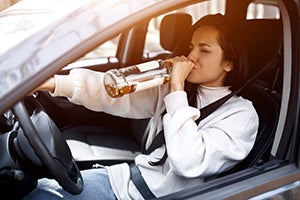
While many drivers assume that a 0.08% BAC is required for any DUI arrest, California law establishes multiple legal standards depending on the driver's age, probation status, license type, and physical impairment.
Whether you are an adult driver, a commercial license holder, an underage driver, or someone currently on DUI probation, knowing which legal threshold applies to your situation is essential for protecting your driving privileges and personal freedom.
What Are the Key Differences Between BAC Limits and Zero Tolerance Laws?
California law applies distinct legal thresholds for alcohol consumption while driving. The standard applied dictates whether an offense results in criminal charges, civil driver's license suspensions, or probation violations.
|
Driver Category / CA Statute |
Legal Alcohol Threshold |
Legal Classification & Consequences |
|
Standard Adult Drivers (21+) Vehicle Code 23152(b) VC |
0.08% BAC or higher | Criminal misdemeanor offense; jail time, fines, probation, and license suspension. |
|
Commercial License Holders Vehicle Code 23152(d) VC |
0.04% BAC or higher | Criminal offense; commercial license revocation, court fines, and probation. |
|
Underage Drivers (Under 21) Vehicle Code 23136 VC |
0.01% BAC or higher | Civil infractions; mandatory 1-year DMV driver's license suspension. |
|
Underage Drivers (Under 21) Vehicle Code 23140 VC |
0.05% BAC to 0.07% BAC | Infraction/fine; alcohol education program and 1-year license suspension. |
|
Drivers on DUI Probation Vehicle Code 23600 VC |
0.01% BAC or higher | Probation violation terms: immediate 1-year license suspension and probation revocation. |
What Is the Standard Blood Alcohol Concentration (BAC) Limit in California?
For most adult drivers aged 21 and older operating standard passenger vehicles, the legal threshold for per se driving under the influence is a 0.08% BAC under California Vehicle Code 23152(b) VC.
BAC measures the grams of alcohol present per 100 milliliters of blood, which officers evaluate using Preliminary Alcohol Screening (PAS) breath tests, evidentiary breathalyzers, or blood samples.
The Two Ways Prosecutors Charge Standard Adult DUIs
Under California law, a driver can be charged with two separate misdemeanor counts from a single DUI incident:
-
Driving Under the Influence (VC 23152(a)): Prohibits driving while mentally or physically impaired by alcohol or drugs, regardless of your precise BAC level. You can be convicted under this subsection even if your BAC was below 0.08%, provided prosecutors prove your driving ability was compromised.
-
Driving with a BAC of 0.08% or Higher (VC 23152(b)): Makes operating a vehicle with a chemical BAC reading at or above 0.08% a per se crime, regardless of whether you exhibited physical signs of impairment.
How Does California's Zero Tolerance Law Work?
California enforces strict Zero-Tolerance policies that prohibit drinking and driving for specific driver categories. Under these rules, any measurable amount of alcohol can trigger severe legal and administrative consequences.
Zero Tolerance for Underage Drivers (Under Age 21)
Under California Vehicle Code 23136 VC, anyone under 21 may not operate a vehicle with a BAC of 0.01% or higher.
-
Civil Nature: A violation of VC 23136 is a civil infraction administered primarily through the California Department of Motor Vehicles (DMV), resulting in an immediate 1-year administrative driver's license suspension.
-
Mandatory Testing: Unlike adult drivers who can refuse pre-arrest PAS tests prior to a formal arrest, underage drivers impliedly consent to submit to a PAS test if suspected of drinking. Refusing the test results in an automatic 1-year license suspension.
-
Escalated Criminal Charges: If an underage driver registers a BAC between 0.05% and 0.07%, they face charges under VC 23140, carrying fines and mandatory DUI school. If their BAC reaches 0.08% or higher, they face full criminal misdemeanor charges under VC 23152.
Zero Tolerance for Drivers on DUI Probation
Under California Vehicle Code 23600, individuals serving summary probation for a prior California DUI conviction are subject to zero-tolerance conditions:
-
Drivers on DUI probation are strictly prohibited from driving with a BAC of 0.01% or higher.
-
If pulled over, probationers must submit to a PAS breath test if an officer requests it. Refusing to submit to chemical testing violates probation terms.
-
A BAC of 0.01% to 0.03% triggers an automatic 1-year DMV license suspension.
-
Testing at 0.04% BAC or higher constitutes a direct violation of DUI probation, exposing the driver to probation revocation, bench warrants, and remaining jail time on the underlying sentence.
What Is a Hypothetical Example Comparing BAC vs. Zero Tolerance?
Scenario: The Post-Dinner Traffic Stop
-
The Drivers: Marcus (age 28) and Tyler (age 20) attend a gathering where each consumes one standard beer over dinner. An hour later, they drive home in separate vehicles and are stopped at a police checkpoint for expired registration tags.
-
Chemical Testing: Both drivers submit to a Preliminary Alcohol Screening (PAS) test. Each driver registers a 0.03% BAC.
-
Legal Outcome for Marcus (Adult Driver): Because Marcus is over 21, his 0.03% BAC is well below the 0.08% BAC limit under VC 23152(b). Showing no physical signs of impairment, Marcus is issued a fix-it ticket for his registration and released without DUI charges.
-
Legal Outcome for Tyler (Underage Driver): Because Tyler is under 21, California's Zero Tolerance law (VC 23136) applies. Even though he is completely sober and driving safely, registering a 0.03% BAC violates the zero-tolerance standard. Officers confiscate his driver's license, issue a suspension order, and the DMV initiates a mandatory 1-year driver's license suspension.
What Related Laws Apply to California DUI and Zero-Tolerance Rules?
Understanding related statutes is critical because DMV administrative actions, implied consent mandates, and criminal court prosecutions operate concurrently.
-
California Vehicle Code 23152(d) VC (Commercial DUI): Establishes a reduced legal limit of 0.04% BAC for commercial driver's license (CDL) holders operating commercial vehicles.
-
California Vehicle Code 23153 VC (DUI Causing Injury): Elevates driving under the influence to a felony if the driver causes bodily injury to another person.
-
California Vehicle Code 23612 VC (Implied Consent Law): Mandates that any lawfully arrested driver must submit to chemical breath or blood testing or face mandatory license suspensions and enhanced criminal penalties.
-
California Vehicle Code 13353.3 VC (DMV Suspension Periods): Outlines statutory driver's license suspension durations for administrative per se (APS) violations and zero-tolerance offenses.
-
California Vehicle Code 23136 VC (Underage Zero Tolerance): Civil statute imposing a 1-year license suspension on drivers under 21 with a BAC of 0.01% or higher.
Frequently Asked Questions (FAQs)
Can you get a DUI in California if your BAC is under 0.08%?
Yes. Under Vehicle Code 23152(a) VC, prosecutors can charge you with DUI if they present evidence showing your physical or mental capabilities were impaired by alcohol or drugs, regardless of whether your BAC was below the 0.08% legal limit.
What happens if an underage driver refuses a breathalyzer test in California?
If a driver under age 21 refuses a PAS breath test when law enforcement requests it, the DMV will automatically suspend their driving privilege for 1 year under California's Implied Consent and Zero Tolerance laws.
Is a zero-tolerance BAC violation considered a criminal conviction?
A violation of VC 23136 (0.01% BAC for under 21) is a civil infraction, not a criminal conviction, and does not go on a criminal court record. However, it results in an administrative DMV license suspension. Higher BAC readings (0.05% or 0.08%+) result in formal criminal charges.
Does mouthwash or cough syrup affect Zero Tolerance BAC readings?
Yes. Certain mouthwashes, breath sprays, and over-the-counter medications contain small percentages of alcohol that can register on preliminary breath screening devices, potentially triggering a false zero-tolerance reading for probationers or underage drivers.
Can a commercial driver be charged with a DUI for driving a personal car at 0.04% BAC?
No. The lower 0.04% BAC limit under VC 23152(d) applies specifically when operating a commercial motor vehicle. When driving a private vehicle, drivers are held to the standard 0.08% BAC limit, though any DUI conviction will affect commercial driving credentials.
How Our Law Firm Can Help You
Whether facing standard adult DUI charges, a commercial license threat, an underage zero-tolerance suspension, or a DUI probation violation, an arrest can jeopardize your driver's license, career, and future.
Navigating both California criminal court proceedings and parallel DMV administrative per se hearings requires experienced legal strategy.
At Esfandi Law Group, our Los Angeles criminal defense attorneys challenge breathalyzer accuracy, contest improper traffic stops, and petition the DMV to preserve your driving privileges.
We examine calibration logs, rising blood alcohol defenses, and procedural errors to seek charge reductions or complete dismissals. Contact our LA office today for a confidential case evaluation by phone or through our online contact form.
