
An Automated Biometric Identification System (ABIS) is a multi-modal enterprise software solution designed for large-scale one-to-many (1:N) biometric identification, cross-matching, and database deduplication.
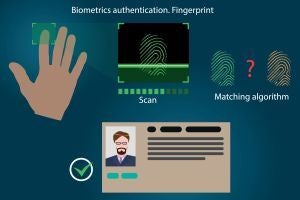
Unlike legacy single-mode biometric frameworks that rely exclusively on one physical trait (such as friction ridge prints), ABIS simultaneously analyzes, indexes, and cross-references multiple biometric traits—including facial geometry, iris patterns, palm prints, and friction ridge data—within a centralized system.
How ABIS Operates: Step-by-Step Biometric Processing
To complete identity verification and deduplication across millions of stored records, an ABIS platform processes biometric inputs through a sequence of five core functional phases:
-
Biometric Input Capture: The system ingests a probe sample, such as a latent fingerprint, high-resolution iris scan, or CCTV facial frame.
-
Liveness & Quality Check: Pre-processing algorithms assess image resolution, clarity, and lighting while running liveness detection to prevent spoofing via silicone molds or high-definition photos.
-
Template Creation & Vectorization: The software extracts distinct physical markers—such as fingerprint minutiae (bifurcations and ridge endings), facial landmark coordinates, or iris tissue patterns—and converts them into encrypted mathematical templates.
-
1:N Algorithmic Search: ABIS executes a one-to-many search, comparing the candidate template against millions of pre-stored templates in the database using high-speed machine learning search algorithms.
-
Human Analysis & Verification: Certified latent print examiners or biometric specialists review the top candidate matches using the ACE-V methodology (Analysis, Comparison, Evaluation, and Verification) before making a formal legal identification.
The Historical Evolution: AFIS to IAFIS to Modern ABIS
|
Timeline |
System / Milestone |
Capabilities & Structural Shift |
| 1980s | AFIS (Automated Fingerprint Identification System) | Introduced by the FBI and local law enforcement to automate 10-print paper card matching and crime scene latent print searches. |
| 1999 | IAFIS (Integrated AFIS) | Established a centralized, nationwide digital repository in the U.S., allowing multi-agency inter-jurisdictional query access across federal, state, and local police. |
| 2014 – Present | FBI NGI / Modern ABIS | IAFIS was formally replaced by the Next Generation Identification (NGI) system. Biometric searching transitioned from single-trait fingerprinting to multi-modal ABIS (incorporating iris, face, palm prints, and tattoos). |
Key Enterprise Applications Across Major Sectors
-
Law Enforcement & Criminal Investigations: Matches partial latent prints recovered from crime scenes, identifies unknown suspects using surveillance facial recognition, and flags individuals operating under alias identities across jurisdictions.
-
Border Management & Immigration: Compares traveler biometric credentials against international watchlists at port-of-entry checkpoints, preventing visa fraud, human trafficking, and unauthorized entry.
-
Healthcare Administration: Ensures accurate patient identification at point-of-care, eliminating dangerous medical record duplications, preventing insurance fraud, and securing prescription dispensing.
-
Financial Services & Banking: Verifies customer identity during digital account opening (e-KYC), preventing identity theft, account takeover attacks, and money laundering.
ABIS Challenges and Legal Admissibility in Court
While multi-modal ABIS provides immense investigative value, biometric evidence must survive rigorous courtroom challenges under Daubert and Frye legal standards:
-
Algorithmic Bias and Demographic Variations: Facial recognition algorithms within ABIS can demonstrate varying error rates across age, gender, and racial demographics, requiring defense attorneys to scrutinize training data accuracy and false-positive rates.
-
Algorithmic Outputs vs. Legal Findings: An ABIS candidate list is a statistical probability output, not a definitive legal finding. Convictions based on automated matches without independent, certified human expert verification are vulnerable to evidentiary challenges.
-
Database Contamination & Duplicate Records: Improper template ingestion or uncalibrated liveness thresholds can introduce duplicate or corrupted templates, leading to false candidate rankings during database queries.
Frequently Asked Questions (FAQs)
What is the main difference between AFIS and ABIS?
AFIS (Automated Fingerprint Identification System) is a legacy unimodal system designed exclusively to capture, index, and match friction ridge fingerprint data. ABIS (Automated Biometric Identification System) is a modern multimodal platform that integrates and cross-references multiple biometric identifiers simultaneously, including fingerprints, palm prints, facial geometry, iris patterns, and scars or tattoos.
What is the difference between 1:1 verification and 1:N identification in ABIS?
A 1:1 (one-to-one) verification compares a live biometric sample against a single specific stored template to confirm a claimed identity (e.g., unlocking a phone or scanning a passport). A 1:N (one-to-many) identification compares an unknown probe sample against an entire database containing millions of templates to discover an individual's true identity or check for duplicate records.
How does liveness detection work in ABIS technology?
Liveness detection is a security mechanism that determines whether a captured biometric sample comes from a living human or a fake replica (spoof). It uses hardware and software checks—such as analyzing micro-movements, blood flow, texture analysis, depth sensing, or pupil light response—to detect spoof attempts like printed photos, digital screens, or silicone masks.
What system replaced the FBI's IAFIS system?
The FBI fully replaced IAFIS (Integrated Automated Fingerprint Identification System) with the Next Generation Identification (NGI) system. NGI operates as an advanced multimodal ABIS, expanding traditional fingerprint capabilities to include palm print repositories, iris recognition, advanced facial recognition (Rap Back), and automated scar, mark, and tattoo indexing.
Can an ABIS automatically declare a suspect guilty or matched?
No. An ABIS does not make final legal determinations or automatically generate courtroom-admissible matches. It uses mathematical algorithms to generate a ranked candidate list of potential matches. A trained, certified human expert (such as a fingerprint or facial impression analyst) must independently examine the candidates before issuing a formal forensic identification.
The Esfandi Law Group can help you. Schedule your free consultation today.
