
Shoeprint evidence often appears at crime scenes, serving as critical impression evidence that can link a suspect to a location or sequence of events. To identify and analyze these marks, law enforcement agencies rely on specialized forensic footwear mark intelligence tools.
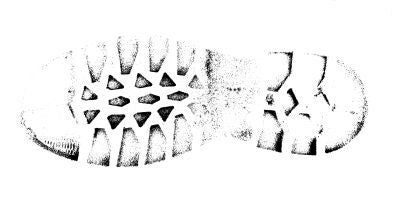
One of the most widely used systems is SoleMate FPX, an advanced footwear reference database developed by Foster + Freeman.
What Is SoleMate FPX?
SoleMate FPX is an impression evidence management tool and reference database used by police departments, forensic laboratories, and crime scene investigators globally. It evolved from the widely used SICAR (Shoeprint Image Capture and Retrieval) system to offer enhanced visual matching and cross-network data management.
Key Database Specifications
-
Database Size: Contains detailed records and sample impression patterns for over 42,000 footwear items.
-
Footwear Categories: Covers athletic shoes, work boots, luxury footwear, safety gear, and casual shoes.
-
Developer: Foster + Freeman.
-
Update Frequency: Continuously updated with new commercial shoe models, sole patterns, and brand releases.
How SoleMate FPX Operates
SoleMate FPX allows investigators to search an unknown crime scene print against its global reference database without needing an exact brand name or serial number up front.
-
Visual Characteristic Search: Investigators input key geometric features from the recovered print into the system's dynamic search interface. This includes visual elements such as shapes (circles, diamonds, lines), text, logos, or unique tread patterns.
-
On-Screen Reconstruction: The software creates a digital composite of the questioned tread mark based on the selected visual features.
-
Automated Cross-Reference: The system queries the 42,000+ item database to output a list of candidate shoes matching the tread pattern features, identifying the exact make, model, and manufacturing era of the shoe.
-
Network Collaboration: SoleMate FPX enables multi-agency network sharing, allowing police departments to share footwear impression intelligence across regional and international borders.
Major Forensic Databases Compared
Forensic scientists utilize several specialized, centralized databases to cross-reference evidence recovered from crime scenes.
|
Database Name |
Managing / Developing Entity |
Primary Evidence Type |
| SoleMate FPX | Foster + Freeman | Footwear outsoles and impression tread patterns |
| NIBIN / IBIS | ATF / Forensics Technology | Ballistic evidence (bullet striations and shell casings) |
| PDQ (Paint Data Query) | Royal Canadian Mounted Police (RCMP) | Automotive paint chemical profiles and layer structures |
| National Automotive Paint File | Federal Bureau of Investigation (FBI) | Original manufacturer automotive paint samples |
| Glass Evidence Reference Database | Forensic Research Community / Academic | Elemental composition and refractive index of commercial glass |
Challenging Shoe Sole Evidence in Court
While footwear databases like SoleMate FPX provide investigative leads, footwear comparison testimony must meet rigorous legal standards under Daubert or Frye challenges to be admissible in court. Organizations such as the OSAC (Organization of Scientific Area Committees for Forensic Science) and SWGTREAD establish standards to prevent faulty footwear evidence from entering trials.
Key technical defenses used to challenge shoeprint evidence include:
-
Class Characteristics vs. Individualizing Features: A database match only establishes class characteristics (the make and model of a shoe). It cannot prove a specific individual wore or owned the shoe without unique, random acquired characteristics (such as specific cuts, embedded gravel, or unique wear patterns).
-
Chain of Custody Discrepancies: Improper collection, inadequate high-resolution photography, or poor casting techniques (such as improper dental stone pouring) can distort the print's scale or pattern, making database queries unreliable.
-
Subjective Feature Input: Because the investigator manually selects shapes or tread patterns during the dynamic search phase, human bias or misinterpretation of partial prints can lead to false matches or incorrect brand exclusions.
Frequently Asked Questions (FAQs)
What is the difference between class characteristics and individual characteristics in shoe sole evidence?
Class characteristics are manufacturing features shared by all shoes of a specific make, model, and size (e.g., a Nike Air Max tread pattern found in the SoleMate database). Individual characteristics are unique, random imperfections—such as cuts, scratches, holes, or specific wear spots—acquired through use. Only individual characteristics can positively link a specific shoe to a crime scene print.
Does a match in the SoleMate database prove a suspect's guilt?
No. A SoleMate database match only identifies the manufacturer, brand, or model of the shoe that made the impression. It establishes that a particular type of footwear was present at the scene, but it does not identify the specific physical shoe or prove who was wearing it at the time of the offense.
Can SoleMate FPX search partial or degraded shoe prints?
Yes. SoleMate FPX features a dynamic search interface that allows investigators to search using small, partial features—such as a single logo, a cluster of circles, or a specific heel pattern—even if the complete outsole footprint was not recovered from the crime scene.
How does SoleMate FPX differ from the older SICAR system?
SoleMate FPX is the updated successor to the classic SICAR (Shoeprint Image Capture and Retrieval) software. It features an expanded database architecture, an updated user interface, dynamic vector-based shape searching, and enhanced network integration for multi-jurisdictional collaboration.
What standards govern the admissibility of shoe print evidence in court?
Shoe print evidence is governed by scientific validity standards established by OSAC and SWGTREAD guidelines. Admissibility depends on showing a documented chain of custody, validated impression-recovery techniques (such as 1:1 scale photography or casting), and demonstrating that the forensic analyst used objective, verified methodologies.
A criminal defense lawyer at the Esfandi Law Group in Los Angeles can help you. Schedule your free consultation by calling us or filling out the contact form here.
