California Penal Code 1203.2 PC: Probation Revocation Hearings Explained
California Penal Code 1203.2 PC is the governing statute that authorizes courts to revoke, modify, or reinstate probation, mandatory supervision, post-release community supervision (PRCS), or parole.
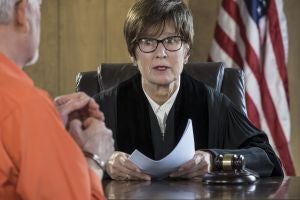
If a probation officer or law enforcement agency alleges that an individual has violated any term of their probation, PC 1203.2 establishes the legal process for issuing bench warrants, making arrests, and conducting formal Probation Violation Hearings (PVH).
Understanding the procedures, legal standards, and potential consequences under PC 1203.2 is essential for anyone facing an alleged probation violation in California.
What Is California Penal Code 1203.2 PC?
Under Penal Code 1203.2 PC, a court retains statutory jurisdiction over a probationer throughout the entire duration of their probation period.
If the court has reasonable cause to believe that a probationer has violated a condition of probation or committed a new crime, it may issue a bench warrant for their arrest or order them to appear in court.
Key statutory provisions under PC 1203.2 include:
-
Warrantless Arrest Power: Probation officers and peace officers can arrest a probationer without a warrant if they have probable cause to believe a probation violation has occurred.
-
Tolling of Probation: Upon the issuance of a bench warrant or summary revocation, the running of the probation period is paused (tolled) until the court resolves the alleged violation.
-
Judicial Discretion: The court has broad authority to continue, modify, or permanently revoke probation and execute a suspended jail or prison sentence.
What Triggers a Probation Revocation Hearing Under PC 1203.2?
A probation revocation proceeding under PC 1203.2 is initiated when the probation department or prosecuting attorney files a petition detailing specific alleged violations.
Technical Violations vs. New Criminal Charges
-
Technical Violations: Non-criminal breaches of court-ordered terms under PC 1203.1, such as failing to report to a probation officer, missing drug/alcohol screenings, failing to pay victim restitution, or missing required counseling sessions.
-
Substantive Violations (New Offenses): Getting arrested for or charged with a new misdemeanor or felony crime while on active probation.
What Rights Do You Have at a PC 1203.2 Violation Hearing?
Because probation is a privilege granted in lieu of imprisonment rather than a constitutional right, a Probation Violation Hearing operates under different rules than a standard criminal trial. However, under the landmark U.S. Supreme Court decision in Gagnon v. Scarpelli and California law, defendants are entitled to basic due process protection.
|
Hearing Aspect |
Standard Criminal Trial |
PC 1203.2 Probation Hearing |
| Standard of Proof | Beyond a Reasonable Doubt | Preponderance of the Evidence (51% likelihood) |
| Fact Finder | Jury of 12 Peers | Superior Court Judge Only (No Jury) |
| Evidentiary Rules | Strict rules of evidence | Relaxed rules; hearsay admissible if reliable (People v. Arreola) |
| Right to Counsel | Guaranteed under 6th Amendment | Guaranteed under California statutory law and constitutional due process |
What Are the Steps in the PC 1203.2 Probation Revocation Process?
The revocation process follows a structured legal sequence within the California Superior Court system:
-
Summary Revocation & Arrest: Upon receiving a probation officer's petition or formal notice of an alleged violation, the court enters an order of summary revocation, which tolls (pauses) the probation period and authorizes the issuance of a bench warrant or hold without bail.
-
Arraignment & Probable Cause Assessment: The defendant appears before a judge to receive formal notice of the alleged violations, while defense counsel may request release on own recognizance (OR) or a reasonable bail setting pending the hearing.
-
Formal Evidentiary Hearing: The prosecution presents evidence—such as officer testimony, lab drug reports, or police records—to prove the breach, while the defense cross-examines witnesses, submits counter-evidence, and presents mitigating facts.
-
Judicial Disposition & Sentencing: If the judge determines by a preponderance of the evidence that a violation occurred, the court decides whether to reinstate, modify, or permanently revoke probation and enforce a jail or prison term.
What Are the Possible Outcomes of a Probation Violation Hearing?
When a court sustains a probation violation under PC 1203.2, the judge has three primary sentencing options depending on the severity of the breach and the defendant's background:
Reinstatement Under the Same Terms
For minor or first-time technical violations, the judge may reinstate probation under the original terms without imposing additional punishment.
Modification of Probation Terms
The court may reinstate probation but modify the terms to prevent future non-compliance. Common modifications include:
-
Imposing additional county jail time (e.g., 30 to 90 days).
-
Extending the total probation period (up to statutory maximum caps under AB 1950).
-
Adding extra community service hours or enrolling the defendant in residential treatment programs.
Revocation and Execution of Sentence
If the court formally revokes probation, it revokes probation entirely and sentences the defendant to jail or state prison. The length of the sentence depends on how the original plea was structured:
-
Suspended Imposition of Sentence: The judge can impose any statutory sentence available for the original crime (minimum, middle, or maximum term).
-
Suspended Execution of Sentence: The judge must execute the exact prison term that was originally ordered but suspended at the initial sentencing hearing.
Hypothetical Example of a PC 1203.2 Violation Case?
Case Background
-
Defendant: Marcus
-
Original Conviction: Felony Grand Theft (Penal Code 487 PC).
-
Original Sentence: Granted 2 years of formal probation with a 3-year suspended state prison sentence.
Alleged Violation
18 months into his probation, Marcus misses three mandatory check-ins with his probation officer and fails a routine drug screening by testing positive for controlled substances. The probation officer files a notice of violation under PC 1203.2.
Court Hearing & Outcome
-
Summary Action: The court enters a summary revocation of probation and issues a bench warrant. Marcus is taken into custody.
-
Formal Hearing: At the PC 1203.2 hearing, Marcus's defense attorney presents documentation showing that Marcus recently lost his job, leading to severe depression and a relapse, but highlights that he has otherwise complied with all terms for 18 months.
-
Judicial Decision: Rather than revoking probation and executing the 3-year state prison sentence, the judge modifies probation: Marcus must serve 30 days in county jail (satisfied through work release) and complete a 90-day outpatient substance abuse program, after which his probation is fully reinstated.
Frequently Asked Questions (FAQs)
What standard of proof is required to prove a probation violation under PC 1203.2?
The prosecution is not required to prove a probation violation beyond a reasonable doubt. Under PC 1203.2, the standard of proof is a preponderance of the evidence, meaning the prosecutor must show it is more likely than not (greater than a 50% chance) that the defendant violated probation.
Can hearsay evidence be used against me at a PC 1203.2 probation hearing?
Yes, but with limitations. While standard criminal trials strictly restrict hearsay, California law allows documentary hearsay (such as laboratory drug test reports or police summaries) at probation violation hearings if the judge deems it reliable and there is good cause to dispense with live witness confrontation (People v. Arreola).
What is the difference between summary revocation and formal revocation under PC 1203.2?
Summary revocation is an immediate, temporary judicial order used to stop (toll) the running of the probation period and grant the court jurisdiction to issue an arrest warrant. Formal revocation occurs only after a full evidentiary hearing where the court permanently terminates probation and imposes a jail or prison sentence.
Can I be found in violation of probation under PC 1203.2 if my new criminal charges are dismissed?
Yes. Because the standard of proof at a probation violation hearing (preponderance of the evidence) is significantly lower than in a criminal trial (beyond a reasonable doubt), a judge can find you in violation of PC 1203.2 for the underlying conduct even if the prosecutor dismisses the new criminal charge or a jury acquits you at trial.
How does PC 1203.2 apply to AB 1950 probation duration limits?
Under California Assembly Bill 1950, most misdemeanor probation terms are capped at 1 year and felony terms at 2 years. However, under PC 1203.2, if probation is summarily revoked due to an alleged violation or bench warrant, the probation clock pauses (tolls). The time elapsed while a warrant is outstanding does not count toward completing your 1-year or 2-year cap.
Can a probation violation warrant be recalled without going to jail?
In many cases, yes. An experienced criminal defense attorney can file a motion to recall or quash the bench warrant and schedule a court appearance. Depending on the nature of the alleged violation and your history, your attorney can often arrange a voluntary surrender or argue for release on own recognizance (OR) without extended custody.
How Our Law Firm Can Help You
Facing an alleged probation violation under Penal Code 1203.2 PC puts your freedom, record, and future at immediate risk. Our experienced California criminal defense attorneys provide aggressive legal representation at every stage of the revocation process:
-
Bench Warrant Recalls: We petition the court to quash active probation warrants and secure your voluntary appearance to avoid unexpected arrests at work or home.
-
Bail & Release Advocacy: We fight for your immediate release on own recognizance (OR) or reduced bail during initial PC 1203.2 arraignment hearings.
-
Evidentiary Defense: We challenge flawed probation reports, contest unreliable hearsay evidence, cross-examine witnesses, and highlight procedural errors by law enforcement or probation officers.
-
Mitigation & Alternative Sentencing: We compile comprehensive mitigation packages—including proof of employment, voluntary enrollment in counseling, or rehabilitation programs—to persuade the court to reinstate probation rather than imposing jail or prison sentences.
If you or a family member face a probation violation hearing under PC 1203.2, contact our defense team at Esfandi Law Group today for a confidential case evaluation to protect your legal rights.