
The Integrated Ballistics Identification System (IBIS) is an automated, high-resolution digital imaging and matching platform that captures, analyzes, and compares ballistic evidence.
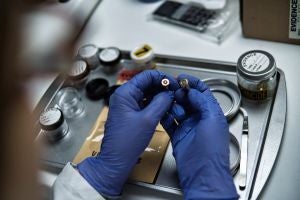
Developed by Ultra Electronics Forensic Technology and managed at the federal level via the ATF's National Integrated Ballistic Information Network (NIBIN), IBIS serves as a critical investigative tool in violent crime investigations, including California Penal Code 187 (PC 187 - Murder) cases.
By digitizing microscopic toolmarks left on fired bullets and spent cartridge casings, IBIS allows forensic ballistics examiners to connect seemingly unrelated shooting incidents to a single firearm within minutes.
How IBIS Operates: The Ballistic Matching Process
When a firearm is discharged, high pressure forces the cartridge casing against the gun's breech face and firing pin, while the projectile travels down the rifled barrel. This mechanical interaction leaves unique, microscopic toolmarks on the metal components:
-
High-Definition 3D Image Capture: IBIS utilizes automated hardware (such as BRASSTRAX for cartridge casings and BULLETTRAX for fired projectiles) to capture 3D topographic images of microscopic impressions.
-
Feature Extraction: The system isolates specific ballistic signatures:
-
Breech Face Impressions: Microscopic striations or grid patterns stamped onto the primer during recoil.
-
Firing Pin Impressions: Unique toolmarks left in the center or rim of the primer cap by the firing pin strike.
-
Ejector & Extractor Marks: Physical scrapes left on the casing rim during mechanical extraction and ejection.
-
Striations & Land Engraved Bands (LEBs): Microscopic grooves scraped along the body of a bullet by the barrel's rifling lands.
-
-
Algorithmic Cross-Matching: The system converts topographic image features into a mathematical algorithm and compares the unknown probe evidence against local, regional, and national databases.
-
Scored Correlation Output: IBIS outputs a ranked candidate list of potential matches, providing investigative leads to law enforcement agencies before a suspect is ever apprehended.
Technical Advantages of IBIS in Firearms Investigations
|
Feature / Advantage |
Technical Impact on Criminal Investigations |
| Objective Toolmark Analysis | Replaces manual, time-consuming optical comparison microscope searches with high-speed automated algorithms. |
| Cross-Jurisdictional Linking | Connects multi-jurisdictional drive-by shootings, gang violence, or serial firearm offenses across city, county, and state lines. |
| Cold Case Resolution | Re-queries newly entered ballistic evidence against archived, decades-old unsolved crime scene evidence stored in NIBIN. |
| Rapid Intelligence (NIBIN NITE) | Delivers actionable ballistics leads to field investigators within 24 to 48 hours of a shooting incident. |
| Standardized Database Structure | Ensures uniform, high-resolution 3D imaging metrics across all accredited crime laboratories nationwide. |
IBIS vs. NIBIN: Understanding the Distinction
A common point of confusion in legal and forensic contexts is the distinction between IBIS and NIBIN:
-
IBIS (The Hardware & Software Technology): Manufactured by Ultra Electronics Forensic Technology, IBIS is the actual physical equipment, 3D scanner, and proprietary matching algorithms used to capture and process ballistic images.
-
NIBIN (The Interstate Network & Database): Managed by the Bureau of Alcohol, Tobacco, Firearms and Explosives (ATF), NIBIN is the national database infrastructure and network that connects IBIS systems across federal, state, and local law enforcement agencies throughout the United States.
Challenging IBIS Evidence in Court: Daubert and Frye Standards
While IBIS provides vital intelligence, ballistic comparison evidence faces significant legal scrutiny under Daubert and Frye standards regarding scientific validity and analyst subjectivity.
Key defense strategies for challenging ballistic evidence in court include:
-
IBIS Correlations Are Leads, Not Final Matches: IBIS does not generate a legally admissible match on its own. It only generates a ranked list of candidate matches. A certified firearms examiner must manually evaluate the physical evidence using a comparison microscope to confirm a match.
-
Subclass Characteristics vs. Individual Characteristics: Defense experts evaluate whether the matching marks are true individual characteristics (unique, random manufacturing imperfections or wear marks) or subclass characteristics (imperfections produced across an entire batch of firearms manufactured using the same worn cutting tool).
-
Consecutive Manufactured Barrel / Firing Pin Distinctions: Toolmark overlap can occur among firearms produced sequentially on the assembly line, requiring strict scrutiny of the examiner's error rates and baseline criteria.
-
Lack of Quantitative PCAST Standards: The 2016 President's Council of Advisors on Science and Technology (PCAST) report highlighted that firearms examination relies partly on subjective visual judgment, emphasizing the need for rigorous proficiency testing and blind verification.
Frequently Asked Questions (FAQs)
Can IBIS identify a gun if the serial number has been filed off or removed?
Yes. IBIS does not rely on a firearm's external serial number. Instead, it analyzes microscopic toolmarks imparted directly onto the spent cartridge casings and bullets during firing. Even if the gun's serial number is completely defaced, the internal mechanical toolmarks left on the ammunition remain unique to that specific weapon.
What is the difference between BRASSTRAX and BULLETTRAX in IBIS technology?
BRASSTRAX is the automated IBIS equipment module specifically engineered to scan and capture 3D images of spent cartridge casings (focusing on firing pin, breech face, and ejector marks). BULLETTRAX is the specialized module designed to hold, rotate, and capture 3D topographic images around the circumference of fired, intact, or damaged bullets.
Does an IBIS database hit automatically prove a suspect committed the crime?
No. An IBIS hit links a specific piece of fired ammunition to a single firearm. It proves that the same gun was used in multiple incidents or that a seized weapon fired the recovered casing. Prosecutors must still independently prove that the specific defendant possessed or discharged that weapon at the time of the crime.
What role does IBIS play in California Penal Code 187 (PC 187) murder cases?
In California PC 187 homicide investigations involving firearms, fast ballistic identification is critical. IBIS allows homicide detectives to quickly determine whether a firearm recovered from a suspect matches cartridge casings recovered from the murder scene, or if the weapon was previously used in prior non-fatal shootings or gang-related homicides.
How does NIBIN ensure national interoperability between different police departments?
NIBIN utilizes a standardized IBIS infrastructure maintained by the ATF across hundreds of partner agencies. This centralized network allows local police departments in different cities or states to upload ballistic data locally and instantly cross-search nationwide databases, revealing multi-state gun-trafficking networks and serial shooting offenses.
The Esfandi Law Group can help you. Schedule your free consultation at (310) 274-6529.
