
In California, mandatory DNA collection is governed by one of the nation's broadest legal standards. Under California law, mandatory biological sample collection—typically done via a buccal (cheek) swab during booking—is not limited to individuals convicted of a crime.
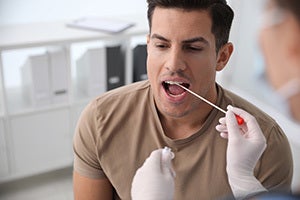
Pursuant to the passage of Proposition 69 (codified under California Penal Code § 296 PC et seq.), law enforcement agencies are legally mandated to collect DNA samples from any adult arrested on suspicion of any felony offense in California, regardless of whether formal charges are ever filed or whether the arrest leads to a conviction.
What Is California Proposition 69 and How Did It Change DNA Collection?
Passed by California voters, Proposition 69—officially designated as the DNA Fingerprint, Unsolved Crime, and Innocence Protection Act—fundamentally altered how criminal justice agencies handle personal genetic data.
Prior to Proposition 69, mandatory DNA submission in California was primarily reserved for individuals convicted of specific, violent felony offenses or sex crimes.
Proposition 69 expanded the scope of the state's DNA and Forensic Identification Data Base and Data Bank Program, mandating DNA collection for:
-
All Convicted Felons: Anyone convicted of any felony offense under California law.
-
All Adult Felony Arrestees: Any adult arrested or charged with any felony offense, effective since January 2009.
-
Registered Sex and Arson Offenders: Anyone required to register under Penal Code § 290 PC (Sex Offender Registration) or Penal Code § 457.1 PC (Arson Registration).
The collected DNA profiles are uploaded to the California Department of Justice (DOJ) database and linked to the Federal Bureau of Investigation's (FBI) Combined DNA Index System (CODIS) to search for matches against unsolved crime scene evidence.
What Types of Crimes Require DNA Submission in California?
Because California Penal Code § 296 PC mandates sample collection upon any felony arrest, both violent and non-violent felony charges trigger the legal requirement.
|
Category |
Qualifying California Offenses (Penal Code & Health & Safety Code) |
| Homicide & Violent Felonies | First- and Second-Degree Murder (PC 187), Voluntary Manslaughter (PC 192), Mayhem (PC 203/205), Torture (PC 206). |
| Sex Crimes | Rape (PC 261), Lewd Acts with a Minor under 14 (PC 288), Child Sexual Exploitation (PC 269), Indecent Exposure (PC 314). |
| Crimes Against Persons | Kidnapping (PC 207/209), Aggravated Battery (PC 243(d)), Assault with a Deadly Weapon (PC 245), Felony Domestic Violence (PC 273.5). |
| Property & Theft Felonies | Residential Burglary (PC 460), Residential Robbery (PC 212.5), Carjacking (PC 215), Arson (PC 451), Grand Theft (PC 487). |
| Felony Drug & Weapon Crimes | Manufacturing Controlled Substances (HS 11379.6), Transport/Sale of Controlled Substances (HS 11352), Carrying a Concealed Firearm as a Felon (PC 29800). |
What Constitutional Controversies Surround Pre-Conviction DNA Collection?
Proposition 69 has been a central battleground for legal debates surrounding individual privacy rights, search and seizure protections, and civil liberties.
The Core Arguments
-
Proponents' View: Law enforcement officials and prosecutors argue that arrestee DNA collection operates as a modern digital fingerprint—a routine, non-invasive booking procedure essential for identifying suspects, solving cold cases, and exonerating wrongfully accused individuals.
-
Critics' View: Civil rights advocates argue that collecting genetic material from individuals who are legally presumed innocent violates the Fourth Amendment and Article I, Section 13 of the California Constitution. Critics emphasize that DNA contains sensitive, personal genetic data far beyond what a standard fingerprint reveals.
What Was the Legal Outcome of People v. Buza?
The constitutional validity of Proposition 69 was directly tested in the landmark case People v. Buza (2018) 4 Cal.5th 658.
Case History and Supreme Court Ruling
-
The Arrest: Mark Buza was arrested for felony arson and refused to provide a cheek swab during booking, leading to an additional misdemeanor charge under Penal Code § 298.1 PC for refusing to submit a DNA sample.
-
Appellate Reversal: A California State Court of Appeal initially struck down the arrestee DNA collection provision, declaring that warrantless collection from pre-conviction arrestees violated the California Constitution.
-
Supreme Court Decision: In 2018, the California Supreme Court reversed the appellate decision, ruling that collecting DNA from validly arrested felony suspects during routine booking is reasonable under both the Fourth Amendment and the California Constitution.
As a result of People v. Buza, mandatory DNA collection upon a valid felony arrest remains fully enforceable across California.
How Can Your DNA Record Be Expunged from the State Database?
If you were arrested for a felony and submitted a DNA sample, but were ultimately never charged, had all charges dismissed, or were acquitted at trial, your DNA profile is not automatically erased from the state database.
Under California Penal Code § 299 PC, you must file a formal petition to have your sample destroyed and your database profile expunged.
Statutory Eligibility for DNA Expungement
Under PC 299, you are eligible to request DNA expungement if:
-
No Charges Filed: You were arrested, but no qualifying felony charges were formally filed within the applicable statute of limitations.
-
Full Dismissal: Qualifying charges were filed but later dismissed by a judge or prosecutor.
-
Acquittal: You were found not guilty of the qualifying offense at trial.
-
Factual Innocence: The court granted a petition declaring you factually innocent under Penal Code § 851.8 PC.
The Expungement Procedure Flow
After a felony arrest, law enforcement conducts a mandatory buccal swab during booking. The outcome of the legal case dictates the path forward:
-
If the Case Results in a Conviction: The DNA sample remains permanently stored in both the California Department of Justice database and the federal CODIS database.
-
If Charges Are Dropped, Dismissed, or Result in Acquittal: The DNA profile is not automatically removed; the individual must formally file a written petition for expungement under Penal Code § 299 PC to compel the state to destroy the biological sample and purge the profile from CODIS.
Hypothetical Example of a California DNA Collection Case
Case Scenario
-
Defendant: Brandon
-
Incident: Arrested on suspicion of felony grand theft (Penal Code 487 PC) following a workplace dispute.
-
Booking Procedure: During booking at the county jail, officers take a cheek swab for DNA analysis under PC 296.
-
Prosecutorial Action: One week later, after reviewing surveillance footage, the District Attorney declines to file charges ("DA Reject") due to lack of evidence.
Legal Outcome & Strategy
Although Brandon was cleared of all wrongdoing and never formally charged, his DNA profile remains stored in the California DOJ databank.
Brandon's criminal defense attorney files a formal Penal Code § 299 PC Petition for DNA Expungement with the court and serves notice to the California DOJ. Upon verifying the DA Reject status, the court issues an order compelling the state to destroy Brandon's biological sample and remove his profile from CODIS.
Frequently Asked Questions (FAQs)
Can I refuse to give a DNA sample if I am arrested for a felony in California?
No. Under California Penal Code § 298.1 PC, willfully refusing to provide a mandatory DNA sample during booking after a felony arrest is a separate misdemeanor offense. Refusal can lead to separate criminal charges, jail time, and court orders authorizing law enforcement to use reasonable force to obtain the sample.
Does a misdemeanor arrest require DNA submission in California?
Generally, no. Pure misdemeanor arrests do not trigger mandatory DNA collection under Proposition 69. However, if you are arrested on a felony charge that is later reduced to a misdemeanor under Penal Code § 17(b) PC (a "wobbler"), officers are still legally authorized to collect your DNA at the time of the initial felony booking.
Is my DNA sample destroyed automatically if my case is dismissed?
No. California law does not automatically expunge arrestee DNA. You or your criminal defense attorney must proactively file a written request and petition under Penal Code § 299 PC to clear your profile from the California DOJ database.
Can police search my DNA profile for unrelated unsolved crimes?
Yes. Once your DNA sample is processed and uploaded to the California DOJ database and the federal CODIS database, it is regularly cross-referenced against unidentified DNA evidence collected from past and future crime scenes.
How long does the DNA expungement process take in California?
The PC 299 expungement process typically takes several months. After your attorney files the petition with the court and serves the local District Attorney and California DOJ, the court verifies that no charges are pending and that the statute of limitations has expired before issuing an order to purge the record.
Speak to a Defense Lawyer for Guidance
If you were arrested on a felony charge in California, forced to provide a DNA sample, or need help removing your genetic profile from law enforcement databases, experienced legal representation is essential.
A skilled California criminal defense attorney can guide you through every stage of the process:
-
Pre-Filing Intervention: Working directly with prosecutors to secure a "DA Reject" or case dismissal to prevent criminal convictions.
-
Expungement Petitions: Preparing and filing formal Penal Code § 299 PC petitions to compel the California Department of Justice to destroy your biological samples and purge your record.
-
Protecting Privacy Rights: Ensuring law enforcement strictly complies with statutory limits regarding your genetic information.
If you have questions about mandatory DNA submission or need help expunging your DNA record in California, contact our legal team at Esfandi Law Group today for a confidential consultation.
